AMS Restoration Inc. — Serving Claremont, CA
Emergency Water Removal & Water Extraction in Claremont, CA
Rapid removal of standing water to reduce secondary damage
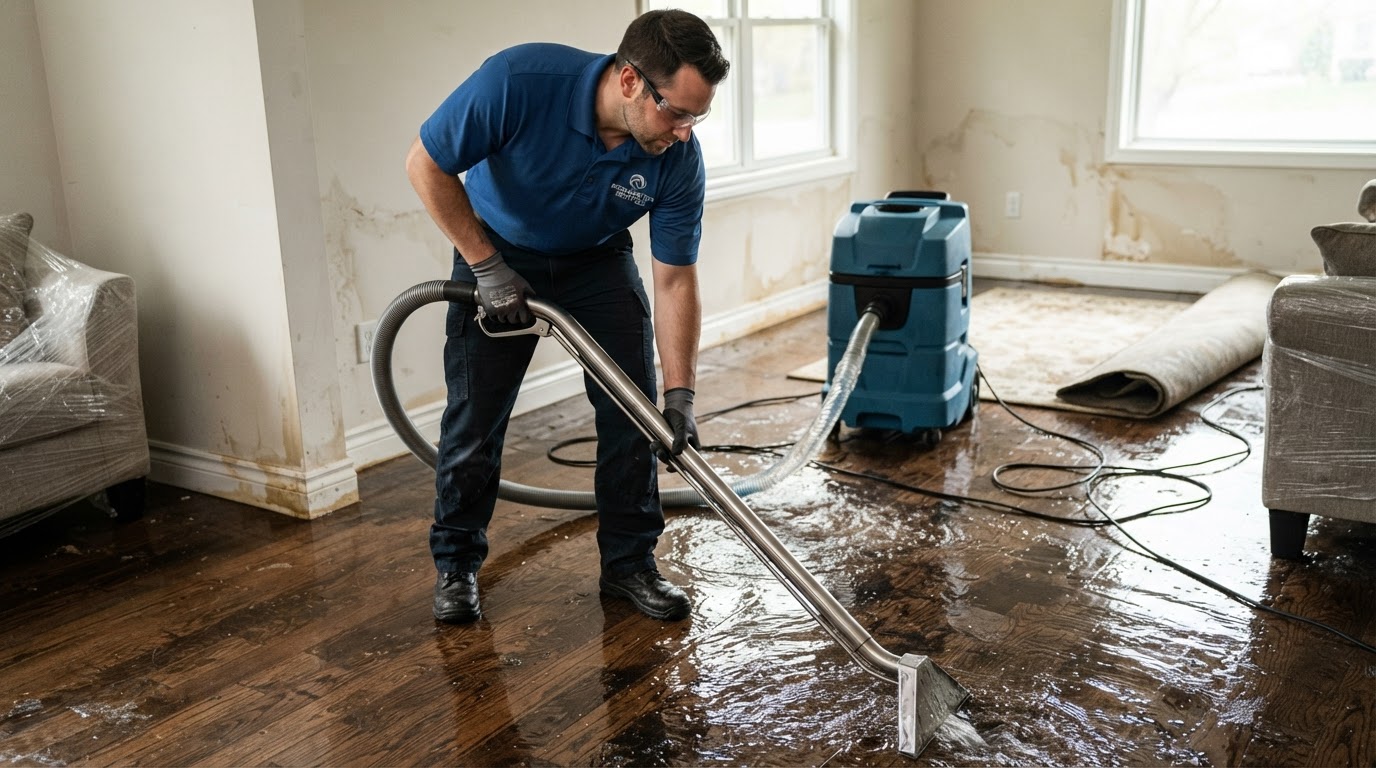
Emergency water removal and water extraction is the process of removing standing water from a property after a burst pipe, overflowing fixture, appliance discharge, water heater failure, roof intrusion, stormwater, or fire sprinkler discharge. AMS Restoration Inc. provides water extraction for Claremont homes and businesses to reduce the volume of water that building materials absorb.
Extraction is the first active step in a water loss, but it is not the whole restoration. Removing the visible water addresses what is pooled on the surface; it does not address the moisture that has already soaked into flooring, subflooring, drywall, and wall cavities. Extraction is one stage of broader water damage restoration, followed by moisture inspection and structural drying.
If you have standing water, call (909) 993-3428. Related services include water damage restoration, structural drying, flood cleanup, and burst pipe cleanup.
Sources of Standing Water Near Claremont
Standing water comes from many sources, and each leaves a different volume and pattern of water across the property. The source influences how quickly water spreads and how far it migrates into materials.
Burst pipes and plumbing failures can flood a room in minutes. Overflowing fixtures and appliance discharge release water steadily until the source is stopped. Water heater failures release a large volume from a single tank. Roof intrusion sends water through ceilings and into wall cavities. Stormwater and ground-level intrusion enter from outside. Fire sprinkler discharge can flood large areas quickly.
Standing water spreads into porous materials quickly. Carpet and padding absorb water directly, hard flooring allows water beneath the surface, and subflooring holds moisture between layers. Water also travels under baseboards and through gaps into wall cavities and adjacent rooms. The longer water sits, the deeper it soaks and the more extensive the drying required.
This is why extraction is time-sensitive. Removing standing water reduces the volume the materials have absorbed and limits how far moisture migrates. But extraction alone does not dry the materials — the moisture that has already soaked in still needs to be addressed through structural drying.
When Standing Water Demands Professional Extraction
- Water pooling on floors, around fixtures, or in low areas
- Water spreading under baseboards into adjacent rooms
- Saturated carpet or padding that squishes underfoot
- Water visible inside wall cavities or above ceilings
- Appliance or fixture actively discharging water
- Large-area flooding from sprinkler or stormwater events
How Water Extraction Works in Claremont
Water extraction follows a sequence that begins with controlling the source and continues through moisture inspection and drying setup. Extraction removes the accessible standing water; drying addresses what the materials have absorbed.
- 1
Source Control
Where possible and safe, the source of water is stopped or controlled before extraction begins, so new water is not entering the property.
- 2
Assessment
We evaluate the volume of water, the affected areas, and how far it has spread — including into adjacent rooms and concealed spaces.
- 3
Water Extraction
Standing water is removed using professional extraction equipment, working from the accessible pooled water outward.
- 4
Moisture Inspection
Moisture meters check what the materials have absorbed, including under flooring and inside wall cavities, establishing a baseline for drying.
- 5
Drying Setup
Air movers and dehumidifiers are positioned to address the moisture that extraction cannot reach inside the materials.
- 6
Dehumidification & Monitoring
Dehumidifiers capture evaporated moisture, and readings over time track progress toward an appropriate dry standard.
Is water extraction the same as water damage restoration?
No. Water extraction is the removal of accessible standing water from the surface. Water damage restoration is the broader process that includes extraction plus moisture detection, structural drying, dehumidification, cleaning, and restoration coordination. Extraction is one stage of restoration — the moisture absorbed into materials still requires drying afterward.
Materials Affected by Standing Water
Standing water affects a range of materials, and each holds moisture differently. Understanding which materials are wet determines what is extracted, what is dried, and what may need removal.
Carpet & Padding
Carpet and padding absorb water directly and often require extraction followed by drying or removal depending on contamination.
Hard Flooring
Hard flooring allows water beneath the surface, where it reaches the subfloor and can be difficult to extract.
Subfloor
Subflooring holds moisture between layers and can remain wet long after the surface appears dry.
Drywall & Walls
Drywall wicks water into its core, and water enters wall cavities through gaps and seams.
Baseboards & Cabinetry
Baseboards and cabinet bases trap water against the floor and conceal moisture behind them.
Contaminated water changes how materials are handled. Water from a clean source like a supply line may allow drying of affected materials, while water from a contaminated source like a sewage backup may require removal and different handling for porous materials. The contamination category is assessed as part of the extraction process.
For the full restoration process, see water damage restoration and structural drying. For flood and burst pipe scenarios, visit our flood cleanup and burst pipe cleanup pages.
Why Claremont Property Owners Call AMS Restoration Inc.
AMS Restoration Inc. serves Claremont and surrounding communities with a focus on rapid water extraction as the first step in a complete restoration. We remove the accessible standing water, then inspect what the materials have absorbed and set up drying to address it.
We do not claim fixed response times or guarantee drying outcomes, because every loss depends on the water volume, the materials, and the conditions. What we offer is an organized process: control the source, extract the water, inspect for hidden moisture, and dry. Documenting affected areas and restoration work may help property owners organize information associated with an insurance claim.
Our service footprint covers Claremont and nearby communities, for both residential and commercial properties. When standing water is present, removing it quickly is the first step toward recovery. Restoring homes, moving hearts.
Related Water Removal Services
Water Extraction FAQs for Claremont Property Owners
Need Standing Water Removed From Your Property?
Standing water soaks into flooring, subflooring, and wall cavities quickly, and the longer it sits the more the materials absorb. Call AMS Restoration Inc. at (909) 993-3428 to discuss your situation, or request restoration service and a team member will reach out. Extraction is the first step — drying what the materials absorbed comes next.