
AMS Restoration Inc. — Serving Claremont, CA
Smoke, Soot & Fire Odor Removal in Claremont, CA
Residue cleaning and deodorization for smoke-affected surfaces and contents
Smoke, soot, and fire odor removal addresses the residue and odor that linger after a fire, even in areas that were never directly burned. Smoke travels on air currents and through HVAC pathways, depositing soot on surfaces and absorbing into porous materials throughout a property. AMS Restoration Inc. provides smoke and soot cleanup for Claremont homes and businesses.
This service focuses specifically on residue and odor, distinct from the broader fire damage restoration process. It involves evaluating where smoke has settled, selecting appropriate cleaning methods for each surface, addressing odor at its source rather than masking it, and evaluating affected contents. The type of soot — influenced by what burned — helps determine the right cleaning approach.
If you are dealing with smoke, soot, or fire odor, call (909) 993-3428. Related services include fire & smoke restoration, contents cleaning, commercial restoration, and water damage restoration.
How Smoke & Soot Affect a Property Near Claremont
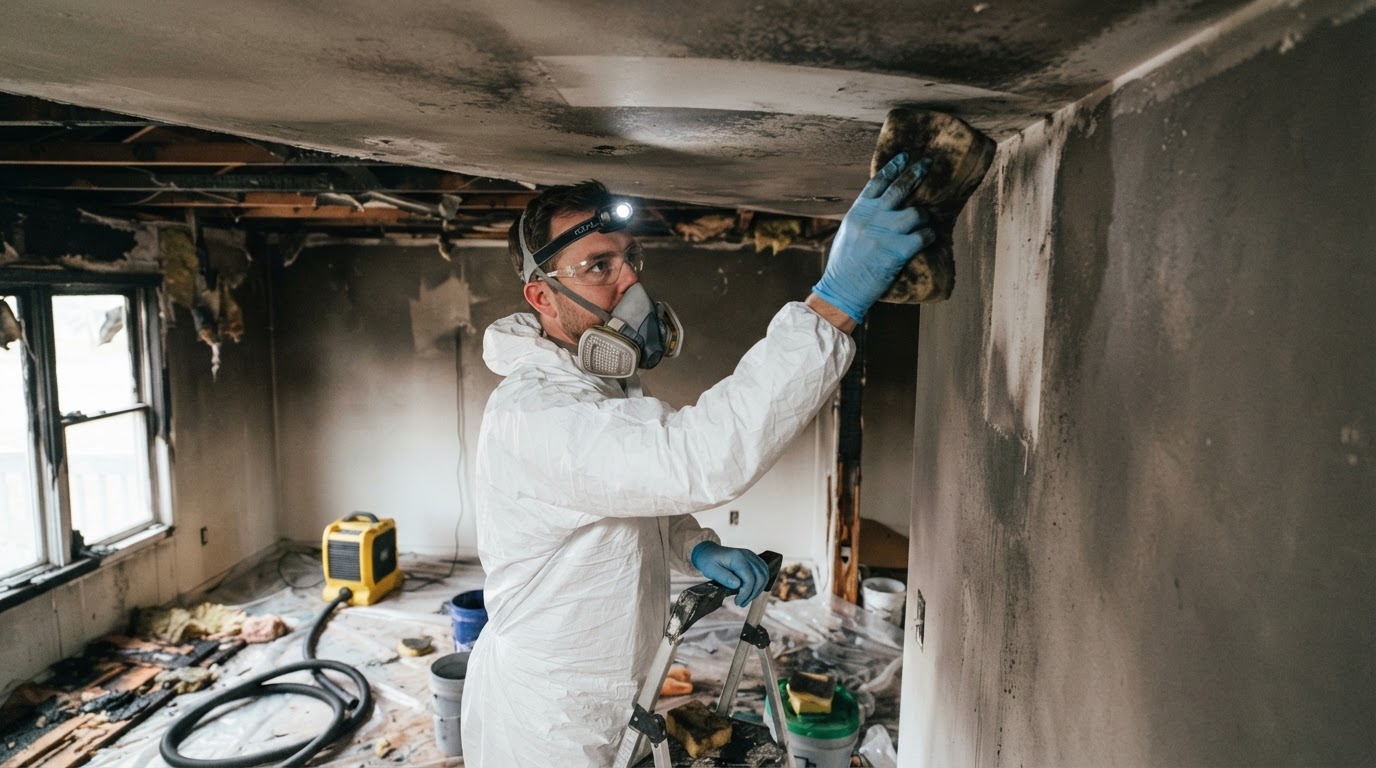
Airborne smoke carries particles that settle on every surface the air touches. Soot coats walls, ceilings, cabinetry, and contents, often accumulating near ceilings and in enclosed spaces. Because smoke follows air currents, rooms far from the fire can end up with significant residue.
Odor absorption is a separate but related problem. Porous materials — drywall, wood, upholstery, fabrics, and clothing — take in smoke compounds and release them slowly. This is why a property can look clean but still smell of smoke. Addressing odor means addressing the residue and the materials that have absorbed it, not simply adding fragrance.
HVAC systems can spread smoke residue throughout a building. If the system was running during the fire, soot and odor can travel through the ductwork and settle in rooms far from the point of origin. This means the full property, including the air pathways, may need evaluation — not just the room where the fire occurred.
Different materials produce different types of soot when they burn. Synthetic materials create a sticky, smeary residue that requires different cleaning than the dry, powdery soot from wood or paper. Matching the cleaning method to the residue type is part of effective soot removal, because using the wrong approach can drive residue deeper into surfaces.
Signs of Smoke & Soot Damage
- Visible soot on walls, ceilings, and contents
- Yellow or brown staining on painted surfaces and fabrics
- A persistent smoky odor that does not dissipate
- Residue inside cabinets, drawers, and enclosed spaces
- Soot deposits near HVAC supply vents and returns
- Discoloration on plastics, appliances, and upholstery
The Smoke & Soot Cleaning Process in Claremont
Smoke and soot cleanup follows a sequence that evaluates the residue, cleans surfaces with appropriate methods, addresses odor sources, and assesses contents. The process is adapted to the type of soot and the materials affected.
- 1
Inspection
We evaluate where smoke has settled, the type of soot present, and which surfaces and contents are affected, including areas distant from the fire.
- 2
Surface Evaluation
Each surface is assessed to determine the appropriate cleaning method, because the right approach depends on the material and the residue type.
- 3
Dry & Wet Cleaning
Where appropriate, dry cleaning methods remove loose soot before wet cleaning methods address bonded residue. Not every surface can tolerate the same approach.
- 4
Soot Removal
Soot is removed from walls, ceilings, cabinetry, and other surfaces using methods selected to avoid driving residue deeper into the material.
- 5
Contents Evaluation & Odor Source Reduction
Affected belongings are evaluated, and odor sources — the residue and absorbed compounds — are addressed rather than masked with fragrance.
- 6
Deodorization & Ongoing Assessment
Deodorization procedures are applied, and the affected areas are reassessed to determine whether further cleaning or treatment is needed.
Why does smoke odor linger?
Smoke odor lingers because smoke compounds absorb into porous materials like drywall, wood, upholstery, and fabrics, which release the compounds slowly over time. Surface cleaning alone does not address what has soaked in. Effective deodorization targets the residue and odor sources rather than covering them with fragrance.
Surfaces & Scenarios Affected by Smoke and Soot
Smoke and soot affect a range of surfaces and property types. The material involved influences how it is cleaned and whether restoration is possible.
Walls & Ceilings
Painted surfaces collect soot and absorb odor. The cleaning method depends on the residue type and the finish.
Cabinetry & Woodwork
Wood grain and pores hold soot. Careful cleaning avoids driving residue deeper into the surface.
Fabrics & Textiles
Upholstery, drapery, and clothing absorb smoke readily. Contents cleaning evaluates what can be restored.
Contents & Belongings
Porous and non-porous belongings respond differently to cleaning. We evaluate condition without promising every item can be restored.
HVAC Pathways
If the HVAC ran during the fire, soot and odor can spread through the ductwork to rooms far from the origin.
Smoke damage occurs in many scenarios: a kitchen fire, an electrical incident, a localized room fire, a restaurant fire, or smoke migration from a neighboring unit. In each case, the residue pattern and the contents involved differ, so the cleaning plan is built around the specific loss rather than applied uniformly.
For the broader fire restoration process, see our fire & smoke damage restoration page. For affected belongings, visit contents cleaning and pack-out. Commercial smoke losses are covered under commercial restoration.
Why Claremont Property Owners Call AMS Restoration Inc.
AMS Restoration Inc. serves Claremont and surrounding communities with a focus on addressing smoke residue and odor at their source. We do not rely on fragrance to cover odor — we evaluate where residue has settled and what has absorbed it, then clean and treat accordingly.
We do not claim that one cleaning technique works in every situation, nor that every smoke-damaged item can be restored. The right method depends on the soot type and the material. What we offer is a methodical process: inspect, evaluate surfaces, clean, reduce odor sources, and deodorize. Documenting affected areas and restoration work may help property owners organize information associated with an insurance claim.
Our service footprint covers Claremont and nearby communities. When smoke and soot affect your property, addressing the residue and odor sources — not masking them — is what moves the property toward recovery. Restoring homes, moving hearts.
Smoke, Soot & Fire Odor FAQs for Claremont
Still Dealing With Smoke, Soot or Fire Odor?
Smoke residue and odor can persist long after visible soot is cleaned, because compounds absorb into porous materials. Call AMS Restoration Inc. at (909) 993-3428 to discuss your situation, or request restoration service and a team member will reach out. Addressing the odor sources — not masking them — is the path to recovery.