AMS Restoration Inc. — Serving Claremont, CA
Structural Drying & Dehumidification in Claremont, CA
Controlled air movement and dehumidification for wet building materials
Structural drying removes excess moisture from building materials such as drywall, framing, subflooring, and other affected components using controlled air movement, dehumidification, and moisture monitoring. AMS Restoration Inc. provides structural drying and dehumidification for Claremont homes and businesses after water damage.
After standing water is extracted, materials can remain wet for some time. Drywall, wood framing, subflooring, flooring, cabinetry, wall cavities, and insulation can all hold moisture that is not visible on the surface. Structural drying is the process of drawing that moisture back out of the materials and capturing it from the air.
If your property needs drying after water damage, call (909) 993-3428. Related services include water damage restoration, water extraction, flood cleanup, and burst pipe cleanup.
Why Materials Stay Wet After the Water Is Gone
Visible water removal is not the same as completing structural drying. When water sits on or against a material, it soaks into the pores and fibers. Drywall wicks moisture into its core, wood framing absorbs water across its grain, subflooring holds moisture against the layers above and below, and insulation traps water against framing. Even after the surface is dry, these materials can still contain excess moisture.
Drying depends on four factors: temperature, humidity, airflow, and the type of material. Evaporation pulls moisture out of wet materials when warm, dry air moves across their surface. Dehumidification captures that evaporated moisture from the air so it does not reabsorb into the materials. Moisture monitoring confirms whether materials are actually reaching an appropriate dry standard.
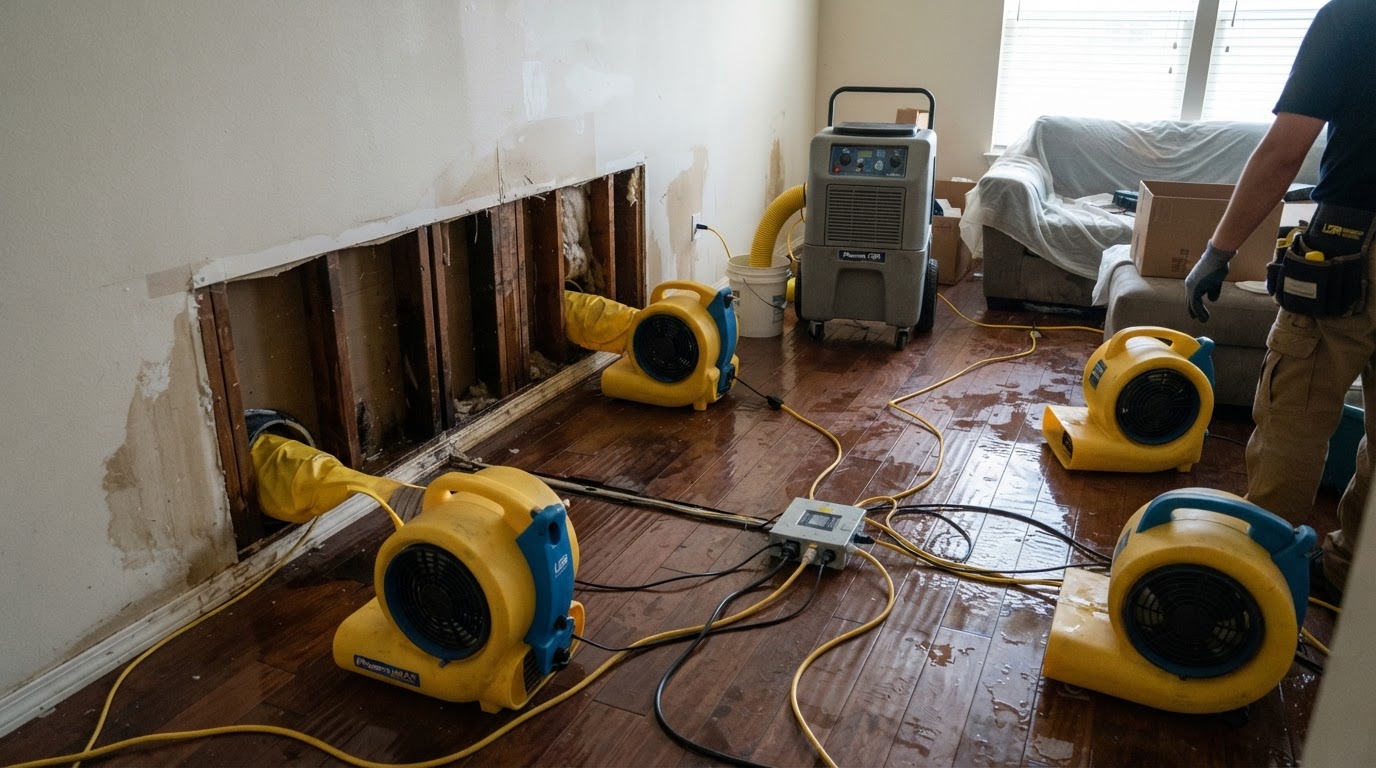
Wall cavities are a common hiding place for moisture. Water enters through gaps and seams, soaks into insulation, and sits against framing where air cannot reach it naturally. Without directed airflow and monitoring, these cavities can stay wet long after the room appears restored. This is why drying is more than placing fans in a room — it requires a planned setup based on where the moisture actually is.
Different materials dry at different rates. Dense materials and those with limited airflow access take longer. The drying plan accounts for the material types, the extent of saturation, and the conditions in the space, with adjustments made as readings change.
Signs Materials May Still Hold Moisture
- Surfaces feel cool or damp to the touch despite looking dry
- Moisture meter readings above the expected baseline
- Persistent humidity or a damp odor in the room
- Warped, swollen, or soft drywall, flooring, or trim
- Condensation on windows or cool surfaces in the area
- Slow-drying cavities behind cabinets or inside walls
How Structural Drying Works Near Claremont
Structural drying follows a planned sequence that begins with a moisture assessment and continues through monitoring until materials reach an appropriate dry standard.
- 1
Moisture Assessment
We use moisture meters to map wet materials, including inside wall cavities, under flooring, and above ceilings, establishing a baseline for drying.
- 2
Drying Plan
Based on the affected materials and the extent of saturation, we develop a drying plan that determines equipment type, placement, and the number of units needed.
- 3
Air Mover Placement
Air movers are positioned to direct airflow across wet surfaces, including into wall cavities and under cabinetry where access allows, to promote evaporation.
- 4
Dehumidification
Dehumidifiers capture moisture evaporated into the air, lowering indoor humidity so that dried materials do not reabsorb moisture from the environment.
- 5
Environmental Control
Temperature and humidity conditions are managed to support efficient evaporation, because drying depends on the balance of heat, airflow, and moisture in the air.
- 6
Moisture Readings & Completion
We take readings over time and adjust equipment. Drying continues until materials reach an appropriate dry standard based on the measured conditions.
What is structural drying?
Structural drying is the process of removing excess moisture from building materials like drywall, framing, subflooring, and cabinetry using controlled air movement, dehumidification, and moisture monitoring. It begins after standing water is removed and continues until materials reach an appropriate dry standard confirmed by readings.
When Structural Drying Is Needed
Structural drying is used after any water loss that has soaked into building materials. The specific scenarios vary, but the need for drying follows whenever materials have absorbed moisture.
After Burst Pipes
Water from a burst pipe soaks into walls, floors, and cavities. Drying addresses the moisture left behind after extraction.
After Flooding
Floodwater saturates flooring, drywall, and subflooring. Drying draws moisture back out of these materials once water is removed.
After Appliance Leaks
Leaks from water heaters, washing machines, and dishwashers often soak into cabinetry and subflooring where drying is needed.
After Roof Leaks
Roof intrusion sends water through ceilings and into wall cavities. Drying addresses moisture trapped above and inside these assemblies.
After Sprinkler Discharge
Fire sprinkler discharge can flood large areas. Drying scales to the affected square footage and the materials involved.
Structural drying is also the step that follows water extraction. Extraction removes the standing water; drying addresses what the materials absorbed. Both are needed for a complete water damage restoration, and skipping drying leaves moisture that can cause secondary damage.
For the full restoration process, see water damage restoration and water extraction. For flood and burst pipe scenarios, visit our flood cleanup and burst pipe cleanup pages.
Why Claremont Property Owners Call AMS Restoration Inc.
AMS Restoration Inc. serves Claremont and surrounding communities with a focus on complete structural drying. We do not simply place fans in a room — we assess where moisture is hiding, build a drying plan, and monitor readings until materials reach an appropriate dry standard.
We do not guarantee fixed drying times, because drying depends on water volume, material types, contamination, accessibility, and environmental conditions. What we offer is a methodical process: assess, plan, dry, dehumidify, and monitor. Documenting affected areas and restoration work may help property owners organize information associated with an insurance claim.
Our service footprint covers Claremont and nearby communities. When materials have absorbed water, drying them properly helps reduce the chance of warping, weakening, and secondary damage. Restoring homes, moving hearts.
Related Drying & Restoration Services
Structural Drying FAQs for Claremont Property Owners
Need Professional Drying After Water Damage?
Materials can hold moisture long after the surface looks dry, and that hidden water drives secondary damage. Call AMS Restoration Inc. at (909) 993-3428 to discuss your situation, or request restoration service and a team member will reach out. Moisture readings, not appearance, determine when drying is complete.